
First-Time Hunter Checklist — Everything You Need Before Your First Hunt
From gear to game plan — the essential checklist every new hunter needs before stepping into the field.
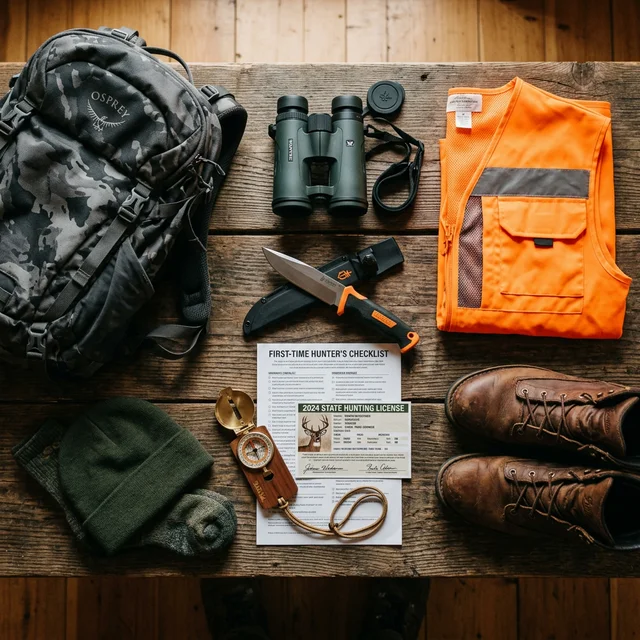
TL;DR — Key Takeaways
- Complete hunter education before anything else — it's required in nearly every state.
- Budget $300–$500 for essential beginner gear (excluding firearms).
- Start with small game or mentored hunts to build field experience safely.
- Always scout your hunting area before opening day — know the terrain, access points, and regulations.
- Tell someone your exact hunting plan and expected return time every trip.
Why a Checklist Matters
Heading into the field unprepared can turn a great experience into a miserable — or dangerous — one. Unlike many outdoor activities, hunting requires specific legal documents, safety equipment, and knowledge of regulations that vary by state and species. This checklist ensures you cover every base before your first hunt.
Step 1: Get Licensed and Educated
Before you can legally hunt, you need to complete two critical steps:
Hunter Education Certificate
Nearly all 50 states require first-time hunters to complete a certified hunter education course. Options include:
- Online courses through Hunter-Ed.com or state-approved providers (6-8 hours, $15-$35 in most states; free in PA, MI, MN, WI)
- In-person classroom courses with a field day component
- Hybrid courses combining online learning with a shorter field session
Your certificate is valid for life and recognized by most other states through reciprocity.
Hunting License
Once you've completed hunter education, purchase your license through your state's fish and wildlife agency website. You'll need:
- Government-issued photo ID
- Social Security Number
- Hunter education certificate number
- Payment method
For a complete walkthrough, see our How to Get a Hunting License guide.
Species-Specific Tags
If you're hunting big game (deer, elk, turkey), you'll likely need additional species tags on top of your base license. Some tags are over-the-counter, while popular units require entering a draw system months in advance.
Step 2: Essential Gear Checklist
Clothing
- Blaze orange vest and hat — Required during firearm seasons in most states (typically 250-500 sq. inches visible). Some states also require blaze orange during muzzleloader seasons.
- Moisture-wicking base layers — Merino wool or synthetic, avoid cotton
- Insulating mid-layer — Fleece or down jacket
- Waterproof outer shell — Rain jacket and pants
- Quality hunting boots — Waterproof, broken in before your hunt
- Warm gloves and beanie — Critical for early-season and late-season hunts
Optics
- Binoculars — 8x42 or 10x42 are versatile choices for most hunting. Quality matters more than magnification; $100-$200 binoculars from brands like Vortex or Nikon work well for beginners.
- Rangefinder — Essential for ethical shot placement on big game
Safety Equipment
- First aid kit — Include blister care, wound dressing, and any personal medications
- Headlamp with extra batteries — You'll be walking in the dark
- Whistle — Emergency signaling
- Fire-starting kit — Waterproof matches or lighter plus tinder
- Navigation — Map, compass, and/or GPS device with downloaded offline maps
Field Supplies
- Water and snacks — Minimum 2 liters of water for a day hunt
- Knife — Fixed-blade or folding knife for field dressing
- Game bags — For transporting harvested meat
- Rope or paracord — 50 feet minimum, multiple uses
- Trash bags — Pack out what you pack in
Documents to Carry
- Hunting license (physical or digital depending on state)
- Species tags
- Hunter education certificate
- Government ID
- Landowner permission (written, if on private land)
Step 3: Know Your Regulations
Every state publishes an annual hunting regulations guide. Read it thoroughly for:
- Season dates — When you can legally hunt your target species
- Bag limits — How many animals you can harvest
- Legal shooting hours — Typically 30 minutes before sunrise to 30 minutes after sunset
- Weapon restrictions — Caliber minimums, magazine capacity limits, or weapon-specific seasons
- Reporting requirements — Most states require harvest reporting within 24-72 hours
Step 4: Scout Your Hunting Area
Before opening day, visit your planned hunting area at least two to three times to:
- Identify access points and parking areas — arrive early on scouting trips to simulate your opening-day timeline
- Find game sign — Tracks, rubs, scrapes, droppings, feeding areas
- Locate water sources — Animals visit water daily
- Note terrain features — Ridgelines, saddles, funnels, and edges between habitat types
- Check for other hunters — Especially on public land, know who else is in the area
- Verify boundaries — Use apps like onX Hunt or HuntStand to confirm public/private land boundaries
Step 5: Practice Your Shooting
Regardless of your weapon choice, proficiency is an ethical obligation:
- Rifles — Practice at distances you expect to shoot in the field. Most deer are taken at 50-200 yards
- Shotguns — Pattern your shotgun at various distances with your chosen load
- Archery — Practice from elevated positions if you'll be in a treestand, and at various angles
- Know your effective range — Only take shots you're confident you can make cleanly
Step 6: Make a Hunt Plan
Before every outing, create a plan that includes:
- Exact location you'll be hunting (GPS coordinates or map pin)
- Expected departure and return times
- Emergency contact who knows your plan
- Vehicle location — Where you'll park
- Backup plan — What you'll do if weather turns or plans change
Share this plan with someone who is NOT hunting with you.
Step 7: Field Dressing and Meat Care
Learn the basics of field dressing before your hunt:
- Cool the meat quickly — The #1 priority after harvest
- Watch online tutorials — Many state agencies publish species-specific videos
- Consider a local processor — For your first animal, a professional processor can handle butchering
- Have a cooler ready at the vehicle with ice
Beginner-Friendly Hunting Options
If you're not sure where to start, these options are ideal for first-time hunters:
Mentored Hunting Programs
Many states offer programs that pair new hunters with experienced mentors. Some states (like Pennsylvania) even allow mentored hunters to hunt without completing hunter education first, under direct supervision. Pennsylvania's Mentored Youth Program accepts hunters as young as age 7.
Small Game
Squirrel, rabbit, and dove hunting are excellent starting points. They involve less equipment, less pressure on shot placement, and more opportunities for practice in the field.
Managed Hunts
State wildlife agencies often organize managed hunts on public land with controlled hunter numbers and guide support. These are especially common for youth hunters and first-timers.
Common First-Time Mistakes to Avoid
- Overpacking — You don't need everything. Focus on essentials.
- Skipping scouting — Showing up on opening day without knowing the area leads to frustration.
- Ignoring wind direction — Animals smell you long before they see you. Hunt with the wind in your face.
- Moving too much — Patience kills more game than hiking miles.
- Neglecting physical fitness — Hunting can be demanding. Start conditioning weeks before the season.
- Buying the most expensive gear — Start mid-range. Upgrade after you know what you actually need.
- Forgetting to check regulations — Rules change annually. Always download and read the current year's hunting regulations booklet for your state.
Recommended Resources
Affiliate links — we may earn a commission at no extra cost to you. Learn more
Frequently Asked Questions
How much does it cost to start hunting?
Budget approximately $300-$500 for essential gear (excluding a firearm or bow). Add $20-$50 for hunter education, $15-$40 for a resident license, and any species-specific tags ($10-$50 each). A used firearm suitable for deer hunting starts around $300-$500.
Can I hunt without any experience?
Yes, but complete hunter education first — it covers firearm safety, wildlife identification, ethics, and regulations. Many states also offer mentored hunting programs that pair beginners with experienced hunters for supervised field experience.
What is the easiest animal to hunt for beginners?
Squirrel and dove are considered the most beginner-friendly game. They're abundant, seasons are long, bag limits are generous, and the shooting distances are shorter. Many experienced hunters recommend starting with squirrel to learn woodsmanship.
Do I need to own a gun to start hunting?
Not necessarily. Mentored hunting programs may provide firearms, and some hunting clubs or guides offer loaner weapons. You can also rent firearms at some ranges. Many beginners start with archery or borrow equipment from experienced friends.
What time of year is best for first-time hunters?
Early fall small game seasons (September-October) offer comfortable weather and abundant opportunities. If pursuing deer, many states have early archery seasons with less competition. Avoid starting during peak firearm deer season when the woods are most crowded.